01 / On arrival
Give your algae a good start.
Unpack your living kit as soon as it arrives. Your kit includes a starter culture, growth medium and a sterile container. Keep everything out of direct sunlight while you set up.
Your starter culture contains the living algae. Growth medium is prepared seawater containing the nutrients they need. The sterile container is their new home.
Damaged or leaking delivery? Contact us straight away, with a photograph if possible.
Prepare a clean space
Wash and dry your hands. Open the supplied sterile container only when you are ready. Avoid touching the inside of the container or lid; do not rinse it with tap water.
Transfer your culture
Carefully pour all of the starter culture into the supplied container. Keep the openings exposed for as little time as possible.
Add the growth medium
Use the supplied Bioluminescent Dinoflagellate Growth Medium, following its label. Add it until the supplied container is about three quarters full, including the starter culture already added. Leave the remaining quarter as air space. Do not overfill or add plain water.
Fit the supplied lid
Close it securely without overtightening. Keep the container upright. If your lid has a vent, keep it uncovered and dry. Use the supplied closure; do not seal over a vent or substitute an airtight lid.
Start a regular light cycle
Choose a bright spot away from direct sun and heat. Give the culture 12 hours of light followed by 12 hours of darkness each day.
You may not see a glow on the first night. Keep the light cycle consistent and give your culture several days to settle. If you’re worried, get in touch—you don’t need to wait 10 days to ask for help.
02 / Everyday care
Light by day. Darkness by night.
Your algae photosynthesise: they use light to make the energy-rich compounds they need to grow. A consistent routine helps their internal clock settle.
Choose gentle, even light
Use bright indirect daylight or a cool-white LED or fluorescent lamp. A lamp on a timer makes the schedule easier to control, especially during short winter days. Avoid a powerful close-up spotlight and bulbs that warm the container.
Keep the temperature steady
Aim for 20–25°C. Keep the culture away from radiators, hot windowsills and cold draughts. Never place it in direct sun, a fridge or a freezer.
A simple daily schedule
These times are an example. Choose a routine you can keep, including at weekends. Room lights count too: keep the culture away from bright lighting during its dark period. Putting the culture in darkness during the day will not immediately reset its internal clock.
Avoid adding decorations, shells, tap water, table salt or plant fertiliser. They can change the water chemistry or introduce contamination. Check with DIYScience before changing to a different vessel.
03 / See the glow
Wait for dark. Swirl gently.
- Wait about two hours into the regular dark period.
- Darken the room and give your eyes a few minutes to adjust. Put away bright phone screens.
- With the lid secure, gently swirl the upright container once or twice. Avoid vigorous shaking or turning it upside down. Keep any vent dry.
- Look for brief blue flashes, then let the culture rest.
The light is a biological reaction triggered by movement. It will not stay on continuously. Repeated stimulation makes it fade for that night; allow the next normal light phase before trying again.
A newly arrived culture may need several days of a steady routine. No glow after 10 days? Get in touch for help.
04 / Fresh medium
Refresh the growth medium.
Growth medium is the water your algae live in, not a daily food dose. Refresh it using Bioluminescent Dinoflagellate Growth Medium intended for this culture.
For an established, healthy DIYScience culture: replace about one quarter of the culture with fresh medium every 3–4 weeks. Record your setup date and plan a care check 3–4 weeks later. If your new culture has not settled or seems weak, contact us before its first refresh.
Prepare the fresh medium
Follow the storage and use-by information on its label. Allow the amount you will use to reach the same room temperature as the culture. Do not heat it or add it straight from cold storage.
Remove about a quarter
Wash and dry your hands. Gently swirl to distribute the cells, then pour about one quarter into a separate clean container. Avoid touching the inside surfaces.
Replace the same volume
Add the same amount of fresh medium to the main culture. Keep the final liquid level at about three quarters of the container’s capacity, then replace the lid.
Keep the remaining medium clean
Close the medium pouch promptly. Never pour used culture or leftover liquid back into the stock medium. Note the refresh date so the routine is easy to follow.
Deal with the removed culture
If you want to grow another culture, keep the removed portion covered and follow the guidance below. Otherwise, keep it contained and ask us for disposal instructions. Do not release live culture outdoors or into natural waterways.
Remove about 75 ml and add 75 ml of fresh medium. The total stays at 300 ml. Use one quarter of your actual culture volume; container sizes vary.
If the culture seems weak
Check the light cycle, temperature and handling first. Brightness varies with viewing conditions and recent stimulation, so it is not a reliable nutrient test on its own. If it is getting weaker, ask for advice before changing the dilution amount or refresh schedule.
Starting another culture
Healthy culture removed during a refresh can seed a new culture in a suitable sterile vessel with fresh medium. This is a separate process from refreshing your existing culture. Ask DIYScience for the starting ratio and container instructions before adding medium. Do not use a suspect or contaminated culture.
05 / Troubleshooting
Not glowing as expected?
My kit has just arrived. Why is there no glow?
Travel can disrupt the light cycle. Follow the settling-in advice under On arrival and the steps under See the glow. If you still see no glow after 10 days of consistent light cycles, contact us. You’re welcome to ask for help sooner.
It glowed once, then stopped.
A fading response after repeated movement does not by itself mean the culture has died. Let it rest, allow its normal light phase, and try again during the next dark phase.
Why does it not glow in darkness during the day?
The glow follows the culture’s internal clock, as explained in Everyday care. If you move it somewhere dark to view it, return it to its normal light cycle afterwards.
The culture is getting weaker over time.
Check for direct sun, excess heat, low daytime light, bright lights at night or an overdue medium refresh. Contact us before making a large dilution or changing several conditions at once.
What if I notice unusual cloudiness, a film or an odour?
These can be signs of contamination, although appearance alone cannot confirm the cause. Keep it separate from other cultures and do not use it to start another one. Send us a photograph and details of recent care before trying to rescue it. Do not sniff the container closely.
What if the liquid level drops?
Evaporation leaves salts behind. Simply adding more salty growth medium can increase the salt concentration. Contact us for advice if the level has noticeably fallen; do not guess at a freshwater top-up.
Can I use ordinary water or homemade salt water?
Use the prepared medium recommended for the kit. Plain water changes the salinity, and table salt in water does not supply the balanced nutrients needed for a healthy culture.
How should I store spare medium?
Keep it closed and follow its label for storage and shelf life. Avoid touching the spout. If the medium looks unusual, the pouch leaks or its use-by date has passed, ask before using it.
A closer look
Living light, explained.
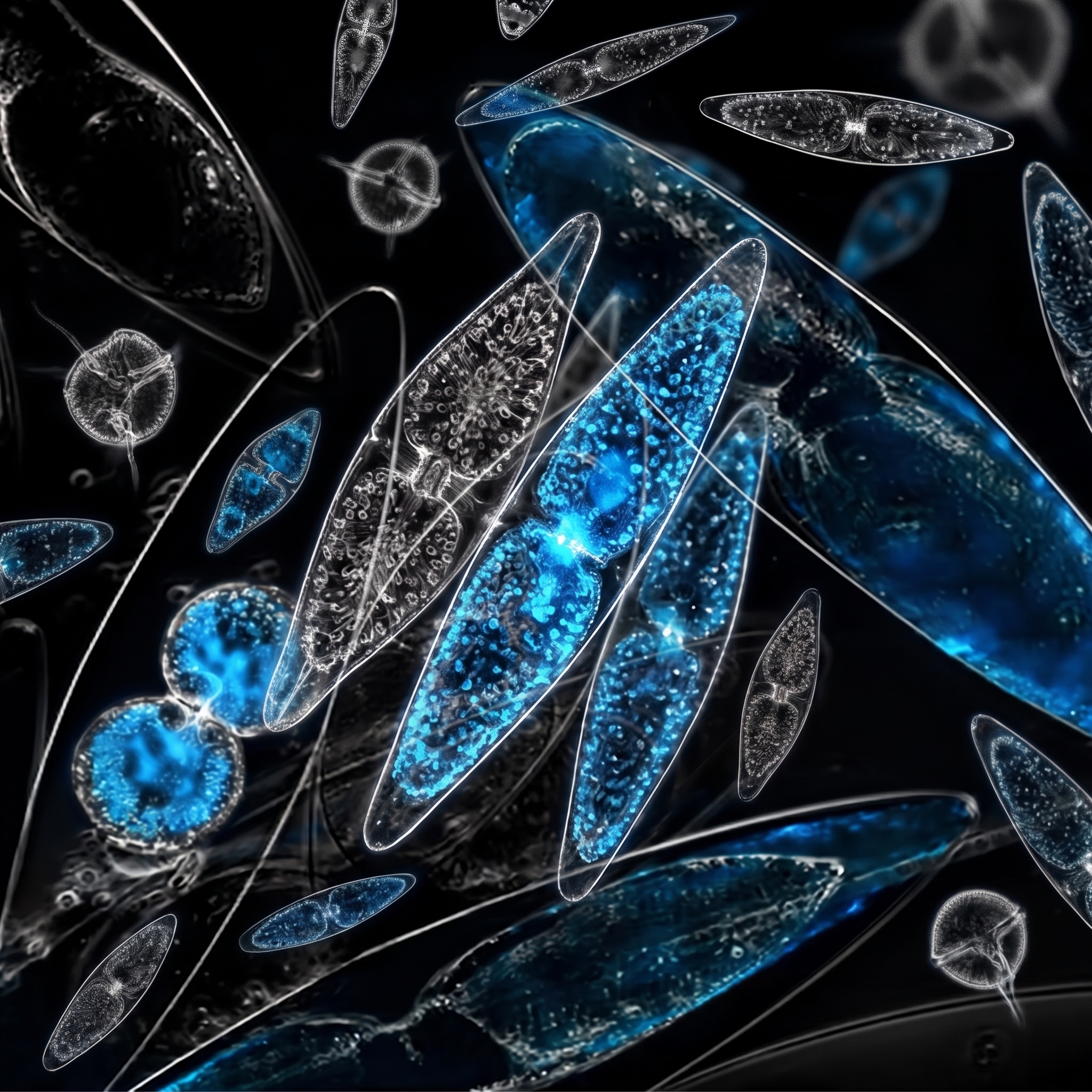
Your kit contains Pyrocystis fusiformis, a species of marine plankton. Each cell is a tiny living organism. These algae photosynthesise during their light period. During their biological night, movement can trigger a chemical reaction that produces blue light. This is called bioluminescence.
The light is thought to play a role in defence in the ocean. Your culture lets you observe this phenomenon at home as brief flashes. The artwork above is an artistic impression, not a microscope photograph or a guide to the brightness of your kit.
Handle as a living science culture
The culture and medium are for observation, not consumption. Supervise children, keep the culture and medium away from food and drink, and wash hands after handling. Do not release live culture outdoors or into natural waterways. Ask DIYScience for disposal advice if you no longer want to keep it.
06 / Supplies & help
Keep your culture going.
Need fresh medium or a hand with your kit? Visit DIYScience on Etsy. If you bought elsewhere, you can also contact us through your original order.
For care advice, use Contact on our Etsy shop or message us from your order. Include your order date, a photo, room temperature, light schedule and the date you last added medium.
Guide updated 8 September 2026. Revisit this page for the latest care instructions.
Further reading on light, temperature and culture care:
- Scripps Institution of Oceanography · Dinoflagellate culturing
- Carolina Biological Supply · Dinoflagellate care guide
General laboratory protocols use different vessels, media and dilution ratios. Follow the instructions for your DIYScience kit and ask us if you are unsure.